
Stay informed with eye health tips from Valley Eye Associates. Discover how to protect your vision with expert advice and the latest updates in eye care.
With more of us spending our days in front of screens or in high-intensity industrial environments, our eyes are working harder than ever. Whether you’re working from a home office, a corporate skyscraper, or a construction site, your vision is one of your most valuable assets. For most of us, “going to work” really means staring at a digital monitor for 8+ hours. If you’re ending your day with a headache, blurry vision, or eyes that feel like they’re full of sand, you aren’t just tired—you’re likely experiencing Computer Vision Syndrome.
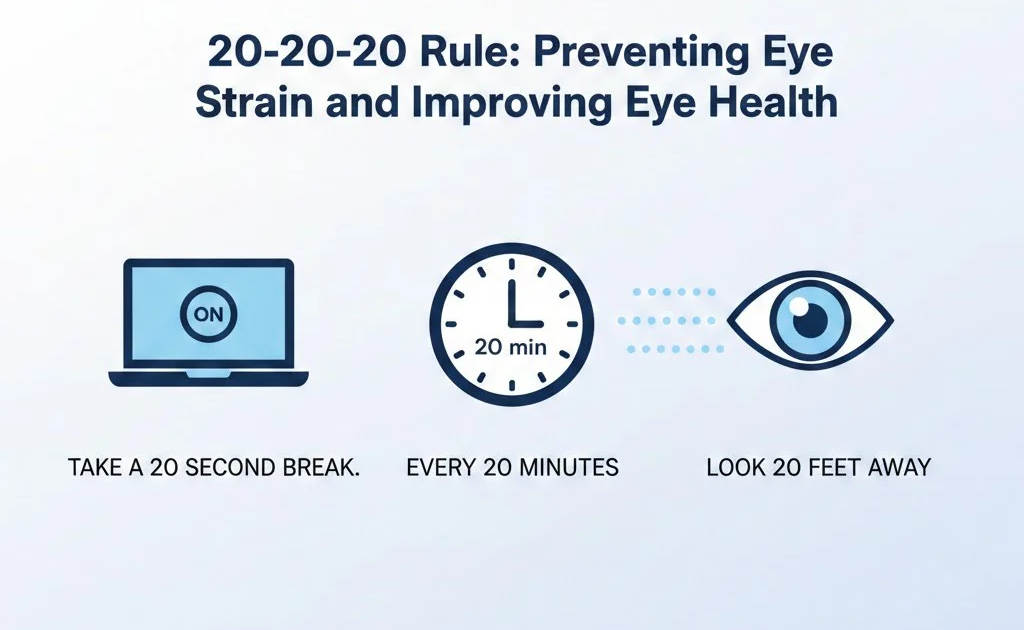
- The 20-20-20 Rule: This is the golden rule of digital wellness. Every 20 minutes, look at something 20 feet away for at least 20 seconds. This allows your eye muscles to relax and reset.
- Optimize Your Ergonomics: Position your monitor about 20 to 26 inches away from your eyes. The top of the screen should be at or slightly below eye level so you’re looking slightly downward.
- Blink More Often: We blink significantly less when staring at screens, which leads to dryness. Keep artificial tears at your desk to keep your eyes lubricated.
Did you know that nearly 2,000 U.S. workers suffer a job-related eye injury every single day? Shockingly, experts estimate that 90% of these injuries are preventable with the right gear. This amounts to roughly $300 million annual cost of lost productivity due to eye injuries!
- Wear ANSI-Approved Gear: Ensure your safety glasses or goggles meet the ANSI Z87.1 standard for impact resistance.
- Match the Tool to the Task: * Safety glasses with side shields for dust and flying particles.
- Chemical splash goggles for handling hazardous liquids.
- Welding helmets or face shields for protection against radiation and extreme heat.
- Always put on your eye protection before entering a hazardous area, not after you start working.
Many eye conditions, like glaucoma or macular degeneration, don’t have early symptoms. A comprehensive eye exam is the only way to detect these issues before they cause permanent vision loss.
This March, take a moment to evaluate your workspace. Is your lighting too harsh? Are your safety goggles scratched?
Small changes today can prevent a lifetime of vision challenges.

February marks AMD/Low Vision Awareness Month, a time dedicated to spreading knowledge about Age-Related Macular Degeneration (AMD) and the resources available for those living with visual impairments.
As we age, our eye health becomes increasingly critical to our independence and quality of life. This month, we want to highlight how early detection and modern support can make a world of difference.
Understanding Age-Related Macular Degeneration (AMD)
AMD is a leading cause of vision loss for people over age 50. It occurs when the macula—the part of the eye responsible for sharp, central vision—becomes damaged. This can make it difficult to recognize faces, read small print, or drive safely.
There are two primary types of AMD:
- Dry AMD: The most common form, characterized by the gradual thinning of the macula.
- Wet AMD: A less common but more severe form where abnormal blood vessels grow under the retina, leading to faster vision loss.
The Importance of Early Detection
Because AMD often progresses slowly and painlessly, many people don’t notice changes until significant damage has occurred. Regular comprehensive eye exams are the best defense. Eye care professionals can often spot early signs of the disease before you notice any symptoms yourself.
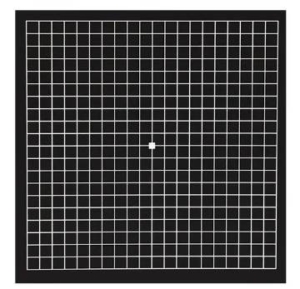
Tip: If you notice straight lines appearing wavy or a “fuzzy” spot in the center of your vision, schedule an eye exam immediately.
Living Well with Low Vision
A diagnosis of AMD or low vision doesn’t mean giving up on an active life. Low vision rehabilitation focuses on maximizing the sight you have left through:
- Magnification Tools: High-powered lenses, digital magnifiers, and specialized software.
- Lighting Adjustments: Using task lighting and reducing glare to improve clarity.
- Daily Living Skills: Learning new ways to navigate the kitchen, manage medications, and use technology.
Take Action This Month
Schedule an Exam: If it has been more than a year since your last eye check-up, call us at 920-739-4361 to schedule an examination.
Check Your Vision: Use an Amsler Grid at home to monitor for changes in your central vision.
Join the Conversation
Help us spread the word this February. Share this blog with loved ones and encourage the seniors in your life to prioritize their vision health!
Learn More: Visit the American Academy of Ophthalmology for detailed resources on eye health.
STOP! Take a breath. It is not an emergency.
If you’ve recently been told you have cataracts, your first instinct might be to get them out as quickly as possible. We live in a world of “instant results,” and the idea of surgery can feel like a looming deadline.
However, at Valley Eye Associates, we often tell our patients something that surprises them: Take your time.
In the vast majority of cases, cataract surgery is a non-emergent procedure. While it is life-changing, it is rarely an “immediate” medical necessity. Here is why waiting a month or two—and doing your homework—is actually the smartest move you can make for your vision.
This is a One-Time Decision
Unlike a prescription for glasses that you can change next year, the intraocular lens (IOL) you choose during cataract surgery is intended to stay in your eye for the rest of your life. Rushing into surgery without understanding your options is like buying a house after only seeing the front door.
You need time to consider:
- Your Lifestyle: Do you drive a lot at night? Do you spend hours on a computer? Are you an avid reader?
- The Lens Options: From standard monofocal lenses to premium multifocal or Light Adjustable Lenses (LAL), each technology offers a different “visual lifestyle.”
- Your Priorities: Are you okay with wearing reading glasses, or is your goal to be completely glasses-free?
Getting to Know Your Surgeon
Choosing who performs your surgery is just as important as the surgery itself. Waiting a few extra weeks gives you the space to ask questions, review the surgeon’s experience, and ensure you feel comfortable with the team that will be caring for you. A good surgical outcome is a partnership between you and your doctor.
A Month or Two is Normal
Patients often worry that their vision will rapidly deteriorate if they don’t book surgery for next week. In reality, cataracts typically progress slowly. Waiting 4 to 8 weeks to schedule your procedure is perfectly standard and gives you time to plan your recovery, arrange transportation, and clear your schedule.
When Speed Does Matter
While we advocate for a measured approach, we are always monitoring for the exceptions. There are rare cases where a cataract becomes “hyper-mature,” causing increased pressure or inflammation in the eye. Our Promise: If your case is urgent or your vision loss is putting your safety at risk, we will work tirelessly to get you seen and scheduled immediately. Your safety is our only non-negotiable.
The Bottom Line
We don’t want you to just see better; we want you to see exactly how you want to see. By taking the time to understand the different lens technologies and choosing the right timing for your life, you aren’t “delaying” your health—you are “optimizing” your future. We want you to feel empowered, not “processed.” Whether you want surgery next month or six months from now, our goal is the same: ensuring that when you finally do go into the OR, you are 100% confident in the plan we’ve built together.
Ready to start the conversation without the pressure? Schedule your cataract examination today, and let’s talk about your options together.
Research advances ophthalmology. For example, the results from past studies has lead to treatments beyond drop therapy for glaucoma patients. Without clinical studies, cataract surgery might still be performed solely with a blade instead of being the laser-focused procedure it is today. Forty-somethings looking for freedom from glasses might still be soaking their contact lenses in solution overnight.
Thanks to research, all this and more are made possible for those seeking clear vision. Exciting breakthroughs like that spur doctors to continue honing their skills, something that’s especially true at Valley Eye Associates. Here we not only enthusiastically embrace research, but we also actively participate in clinical studies. Our patients — some of whom are facing serious vision conditions — are counting on us to be on top of the latest advancements.
And we are. Valley Eye Associates values research so highly that we make it a practice-wide priority. We’re involved in studies that advance laser vision correction along with those that explore better treatments for cataracts, glaucoma, cornea, and dry eye.
Rest assured, Valley Eye Associates only agrees to participate in research studies we’ve thoroughly investigated and would perform on ourselves or loved ones. Research moves the field forward, and that’s always a good thing for patients; however, we are also committed to conducting research in the safest, most efficacious manner possible.
Interested in participating in a research study? Our doctors are all familiar with our current studies and the ideal patient profile for each. If you’re a match, your doctor will share the research opportunity with you.
We do not recommend that patients put off treatment to participate in a research study.
When you hear “glaucoma,” you may think of its nickname, “the silent thief of vision,” and a host of intimidating statistics — and understandably so. Glaucoma is one of the world’s leading causes of blindness.
Our team of experts at Valley Eye Associates is here to ease some of your worries and help you achieve the best vision possible. That’s why we continually research and apply more advanced eye care technologies to our practice, like IRIDEX’s MicroPulse laser therapy: one of the latest procedures in addressing a glaucoma diagnosis.
MicroPulse laser therapy uses a state-of-the-art laser procedure to treat retinal diseases and glaucoma. While lasers are a common technique in today’s field of ophthalmology, MicroPulse laser therapy approaches vision treatments in a unique manner. The MicroPulse laser uses a refractory period that allows the tissue to cool in between laser pulses, effectively decreasing and preventing tissue damage. Coupled with the surgeon’s ability to finely control the laser’s heat properties, treatment risks are at a new low. This procedure even lessens the need for future invasive eye surgeries.
How MicroPulse Works
A laser beam emits a continuous wave that becomes sectioned into a series of brief, low energy pulses, which are then divided by short rest periods.
- A smaller width (the amount of time that the laser is active) ensures that the heat from the laser does not reach tissues surrounding the targeted area.
- With a longer interval (the amount of time that the laser is off) in between each pulse, the tissue has ample time to cool down before the next pulse arrives.
Traditional laser procedures work to lower intraocular pressure through increased watery outflow and decreased aqueous production. MicroPulse laser therapy achieves the same effect in a similar manner, but with little to no harmful side effects.
Schedule an Appointment
You and your vision are of the utmost importance to us. If you notice that you present any symptoms of glaucoma, come see us as soon as possible. Call (800) 344-4443 to schedule an appointment. We’ll be here for you and your eyes… CLEARLY.
Our team of experts at Valley Eye Associates understands that glaucoma can be an overwhelming and daunting diagnosis, and because it is, we constantly use and study the most advanced vision technologies. A recently created medical device has helped take the anxiety out of glaucoma treatment: the Hydrus Microstent.
The Hydrus Microstent is a flexible device that stimulates drainage in the eye. Only the size of an eyelash, the stent effectively reduces intraocular pressure and helps manage glaucoma.
This device is approved for use during cataract surgery, but the procedure is minimally invasive, so patients can expect fewer complications and a quicker healing time than traditional glaucoma procedures. Patients won’t be able to feel or see the stent. If you are an adult with mild to moderate primary open angle glaucoma and you will be undergoing cataract surgery, you may be a candidate for this device.
The Hydrus Microstent is installed in Schlemm’s canal — a circular vessel that maintains homeostasis in the eye — widening the eye’s natural outflow channel which allows fluid to flow more freely, decreasing intraocular pressure. This stent spans 90 degrees of Schlemm’s canal, and because it does, fluid more easily reaches the eye’s drainage system, which distributes it to the circulatory system.
The Hydrus Microstent’s success is evident:
- After two years, 78% of Hydrus Microstent patients didn’t need drops.
- Hydrus Microstent patients experienced a 61% reduction in invasive secondary surgeries compared to cataract surgery alone.
- Compared to the control of a micro invasive glaucoma trial, the Hydrus Microstent showed the greatest intraocular pressure reduction.
- Most notably, the Hydrus Microstent is clinically proven to eliminate the necessity of glaucoma medication.
We value you and your vision. That’s why we’re furthering our practice with some of the best eye care technologies. Don’t wait to treat your glaucoma. Call (800) 344-4443 to schedule an appointment.
Do you know the definition of myopia?
Chances are, you know more than you give yourself credit for. You’ve likely heard myopia’s more familiar term “nearsightedness,” and if you are one of the more than 40 percent of Americans with the condition, you’re probably better acquainted with its effect on daily life more than you are with what Webster’s Dictionary has to say about it.
But since we mentioned the definition, here it is: myopia or nearsightedness is the inability to see objects clearly at a distance. It happens when your eyeball becomes elongated or the cornea — the protective outer layer of your eye — is too curved, the light that enters your eye focuses images in front of the retina instead of directly on it, where it’s needed for optimal clarity.
Myopia has become particularly prevalent among children, and its instances are steadily increasing.1 We’ve witnessed the trend firsthand at Valley Eye Associates as our younger patients are increasingly needing interventions for myopia.
One of the best interventions we’ve found is the Brilliant Futures™ program developed by CooperVision. Through the program, certified eye care practitioners can identify children who will benefit from the MiSightⓇ 1 day and fit them for the lenses. The MiSight 1 day lenses are designed for wear by children ages 8-12. For maximum benefit, it is recommended that they wear the lenses six days per week for ten hours per day.
The results have been significant — both in terms of outcomes and peace of mind. “MiSight has been a great option that we’ve been able to offer our patients that was designed specifically for slowing the progression of myopia (nearsightedness). The kids have done extremely well and parents are pleased with the outcomes so far!,” said Dr. Angela Rodriguez, an optometrist at Valley Eye Associates and certified Brilliant Futures practitioner.
To schedule your child’s appointment, call us at (800) 344-4443.
1. Cooper, Y. (2019, May 1). With Childhood Myopia Rates on the Rise, the American Optometric Association Highlights the Importance of Early Intervention through Annual Eye Exams. Retrieved from https://www.aoa.org/about-the-aoa/press-room/press-releases/myopia-rates-on-the-rise
You may have heard the saying, “Treat the cause, not the symptom.” In the area of dry eye, many of the treatments available today focus only on treating dry eye symptoms. This can offer temporary relief, but unless you treat the cause of your dry eye, the symptoms will flare up again, and again, and again.
Valley Eye Associates is committed to offering long-term relief from dry eye disease, and is proud to offer an exciting new treatment for dry eye called Optima IPL. IPL is short for Intense Pulsed Light, a powerful and gentle light treatment that goes beyond just treating your dry eye symptoms and works to end the cause of your dry eye.
Unlike drops or medication, IPL treatment creates a gentle heat on your skin and eyelids that works to shrink abnormal blood vessels and liquifies hardened oils around your eye. These hardened oils are one of the causes of dry eye, and by liquifying and releasing the oils, IPL treatment addresses the cause of your dry eye and can reduce your dry eye symptoms for weeks or months instead of hours.
At its core, symptoms such as abnormal blood vessels and hardened oils are indications of chronic inflammation around the eye. Drops and medications can temporarily help, but IPL works to reduce or eliminate the causes of this inflammation to provide lasting relief. Until the source of the chronic inflammation is treated, dry eye symptoms will keep coming back.
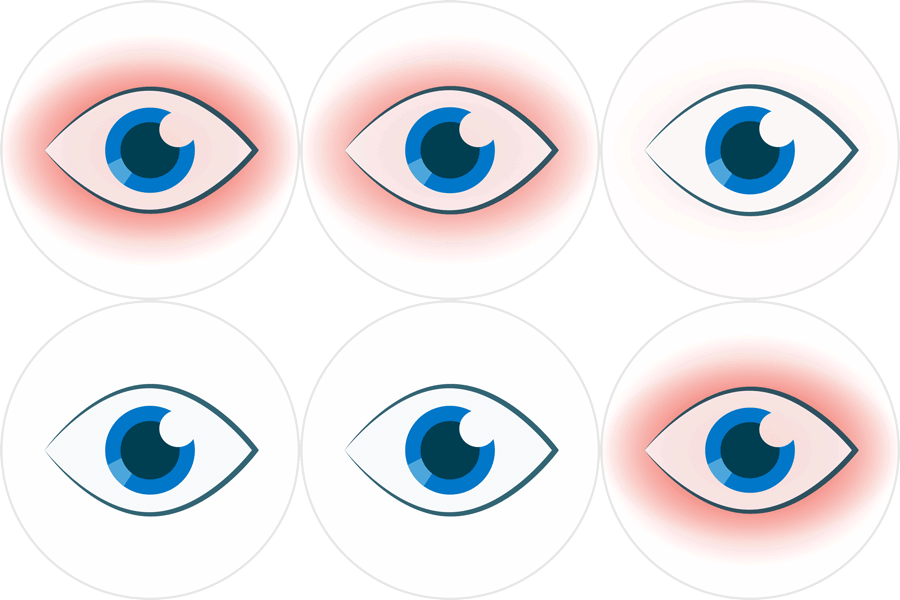
Reduces Inflammatory Mediators
Decreases the level of pro inflammatory mediators, progressing the inflammation.
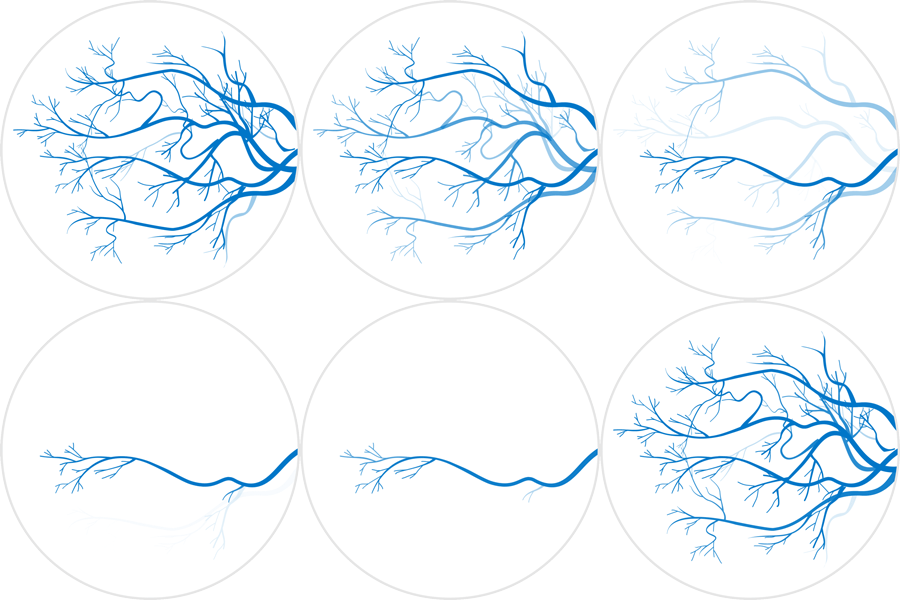
Alleviates Abnormal Blood Vessels
Destroys the abnormal blood vessels that are perpetuating the inflammation.
“Dry eye disease affects so many people in our area, and we’ve seen Optima IPL help people find long-lasting relief from dry eye,” says Dr. Angela Rodriguez. “As we approach the winter months, dry eye can be a real issue. We want to help more people find relief from dry eye this winter and beyond.”
With the advanced technology of Optima IPL, each treatment is customized to the exact skin type and condition of each patient. It is one of the most advanced treatments available today to treat dry eye disease. If you suffer from dry eye and are interested in a long-lasting treatment, talk to the team at Valley Eye to see if Optima IPL treatment is right for you.
Since the onset of COVID-19, working from home has become the new normal for many people. Individuals have rearranged their living spaces and assembled home offices to accommodate the need to be productive.
Keeping the health of your eyes in mind is an important step as you continue to optimize your home setup. Balancing the tasks of logging in to remote conferencing, working with pets at your feet, remembering to unmute, and the many nuances of living and working within the same environment can be overwhelming to juggle. We want a healthy routine for your eyes to be as easy as possible, so we’ve outlined the top ways to care for your eyes while working from home.
1. Light
Eye strain can be bothersome in environments where excessively bright lighting is present. Too much natural or artificial light can be hard on your eyes. If possible, position your computer to the side of a window to avoid a flood of natural light directly behind or in front of your workspace. Soft white LED or incandescent light bulbs will create the best artificial light for you to work under.
Be sure to consider the screen as a light source as well. The intensity of your screen brightness should match the room you are working in. Open a page with a primarily white background to test the lighting of your screen. If the screen seems to be emitting light, it’s too bright. If the screen seems dull, it’s too dark. Play around with the screen setting on your device or turn on the setting to automatically adjust the brightness based on your surroundings.
2. Position
This tip may come as a surprise, but posture can also affect eye strain. Assuming proper posture can be one of the most challenging obstacles when working from home. Chair height and monitor distance are the key factors in setting yourself up for good posture. Your feet should rest comfortably on the floor and your monitor should be placed directly in front of you about 20 to 24 inches away from your eyes. Ideally, to avoid squinting and neck strain, the center of the screen should be 10 to 15 degrees below your eyes.
3. Exercise
We all know exercise is important and that goes for your eyes too. Healthy eyes can easily shift focus between near and far vision. Looking at a computer screen for extended periods may make it difficult for your eyes to focus at a distance. Although this is temporary, it’s a good practice to exercise your eyes to relax the muscles and reduce fatigue. Consider working the “20-20-20 Rule” into your daily routine. It’s as simple as pausing to look at an object at least 20 feet away for 20 seconds every 20 minutes.
Working primarily at a computer can also cause dry eye. We tend to blink less while looking at a screen. Studies have shown that people blink about one third less while working at a computer. Help avoid dry eye by blinking your eyes slowly 10 times every 20 minutes.
4. Contact & Glasses Care
It is always important to be diligent with hand washing before touching the area around your eyes. As with any contagious disease, it is not recommended to wear contacts while sick. If you aren’t currently ill, it is safe to wear contact lenses, but we encourage you to take precautions by properly washing your hands with soap and water for at least 20 seconds and drying with a clean towel. You should also continue to follow the disinfection methods recommended by your contact lens manufacturer and eye care provider.
To avoid transferring germs to your face, it is also recommended to sanitize and wash your hands and glasses often, especially when frequently removing or adjusting reading glasses.
We know there are many things to think about and balance right now. But taking these small actions of self-care can help you protect one of your most precious assets: your vision.